
Training Techniques That Keep Crews Safe and Work Moving Forward
On any jobsite—whether it’s utility work, construction, excavation, or maintenance—the most important tool a worker carries isn’t in a toolbox at all. It’s knowledge. Effective training not only keeps crews safe, but also keeps work running smoothly and ensures compliance with protection of underground utility facilities training and OSHA requirements. While many contractors aim to keep their training sessions concise, jobsite safety training still plays a critical role in reinforcing safe work practices around ever-present hazards.
Most jobsite trainings last 8 to 15 minutes
and are often incorporated into the daily or weekly pre task planning. These short but focused sessions are opportunities to deliver reminders about safe behaviors, discuss the work for the day, and make sure everyone understands the hazards at hand. The key is to ensure the training is relatable, relevant, and useful for the men and women performing the work.
In today’s fast-paced environment—and with varying levels of resources from contractor to contractor—training is delivered in several different ways. Each method comes with its own strengths and challenges. Below are four primary training techniques commonly used on jobsites, along with some insight into how each can be used effectively.



>>> 1. In‑Person, Traditional Classroom Training
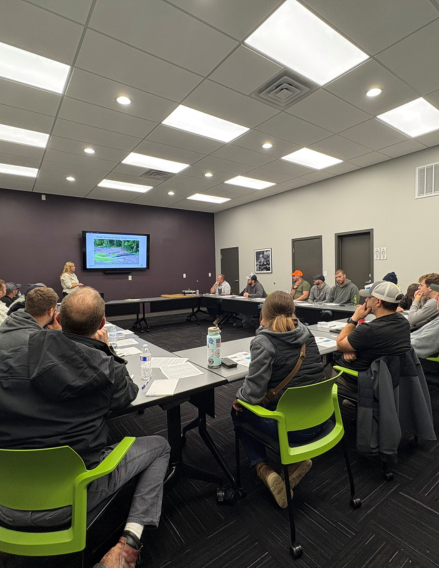
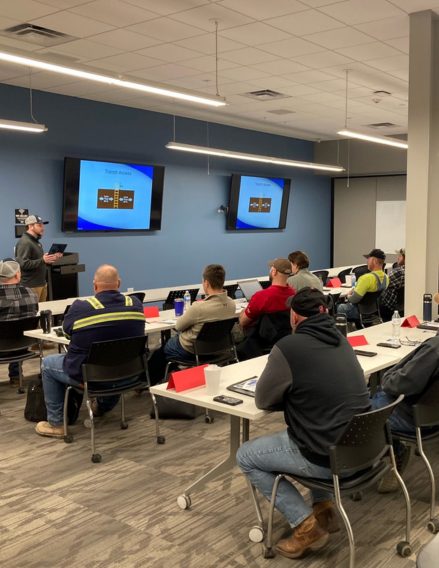
When time and resources allow, traditional classroom-style training remains the gold standard. Bringing workers together in one space gives trainers the chance to deliver detailed information, interact directly with crews, and answer questions on the spot. Classroom environments also give employees the opportunity to focus without the distractions of active jobsite operations.
This type of training works especially well for:
- New hire orientations
- Annual OSHA-required safety refreshers
- Protection of underground utility facilities training (ORC 3781.261)
- Specialized certifications
- Detailed technical topics
- Group discussions and scenario-based exercises
Because workers can exchange experiences and ask questions freely, classroom training often provides deeper understanding and better long term retention.
However, for many contractors—especially smaller crews or teams under tight project deadlines—time is a limiting factor. Supervisors often can’t pull an entire crew off the job for a half-day or full-day of training. Mobilizing everyone to a central location can also be logistically difficult. For these reasons, traditional classroom training is used selectively, with contractors relying on other methods for routine or weekly instruction.
>>> 2. Virtual Training (Live or Recorded)
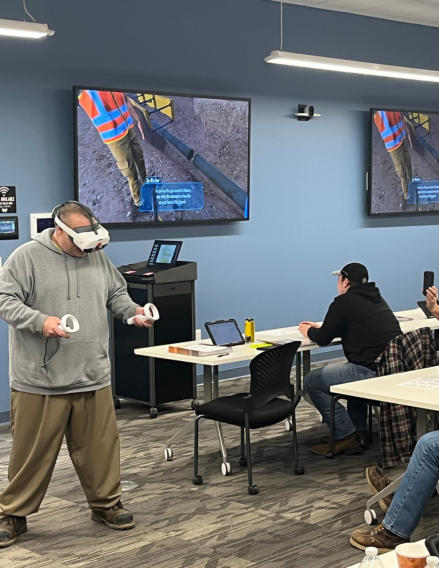
Virtual training has become increasingly common across the industry. Whether delivered through a live video meeting or a recorded module, this method allows workers to complete training remotely, gaining flexibility while reducing the need to travel.
Live virtual sessions allow for real-time interaction, where employees can ask questions and engage in discussion. They closely mimic the feel of a classroom but with far more convenience.
Recorded sessions, on the other hand, let workers complete the training at a time that fits their schedules. This method is especially helpful for contractors with multiple job sites, staggered start times, or small crews that can’t be pulled together at once.
That said, virtual training isn’t without challenges. Some workers may face:
- Technology learning curves
- Connectivity issues in remote areas
- Difficulty engaging with on-screen content versus in-person instruction
Despite these hurdles, virtual training remains a powerful option when used appropriately. It works best when paired with brief follow-up discussions led by supervisors who reinforce the material and connect it to the day’s work.
>>> 3. Weekly Paper Topics with Sign-In Sheets
One of the most traditional—and still most widely used—methods of jobsite training is the weekly paper safety topic. The process is simple: supervisors print a one-page training subject, review it with the crew during the morning stretch-and-flex or toolbox talk, and then collect signatures on a sign in sheet.
This method is:
- Easy to administer
- Low cost
- Practical for crews in the field
- Effective for brief, topic-focused refreshers
- A simple way to maintain OSHA-required documentation
Because the topics are usually specific and concise—examples include trench safety, line locating, PPE reminders, or equipment operation—they fit naturally into jobsite routines. Paper-based training ensures workers get straightforward, relatable information that ties directly to the hazards they will face that day or week.
>>> 4. On-the-Job Training (OJT)
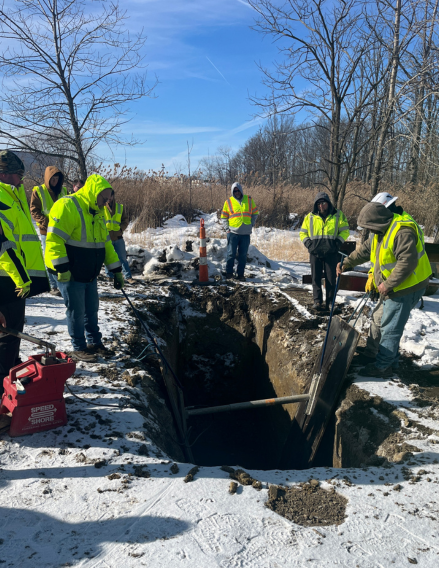
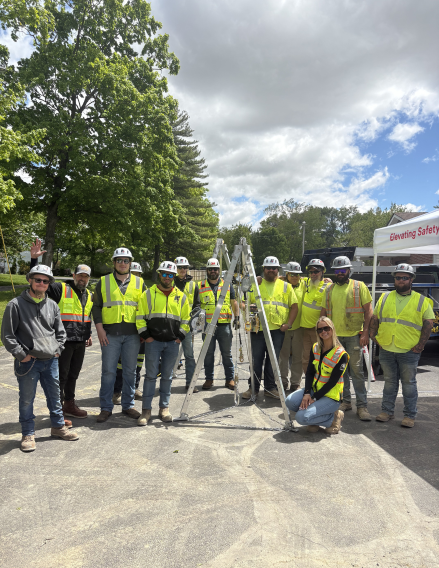
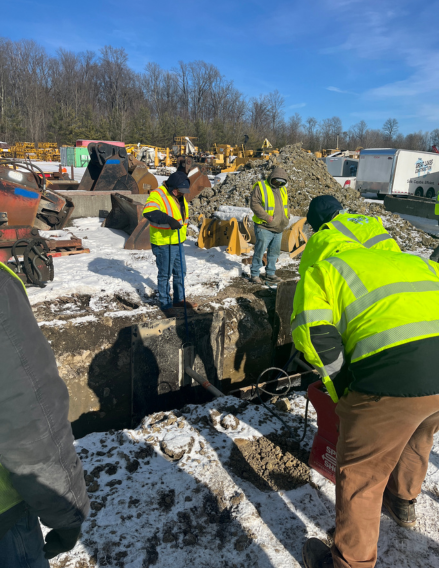
While classroom, virtual, and paper-based training all serve important purposes, some of the most effective learning occurs directly on the jobsite through structured On-the-Job Training (OJT). This method allows employees to learn while performing actual work tasks under the guidance of an experienced supervisor, foreman, or skilled crew member.
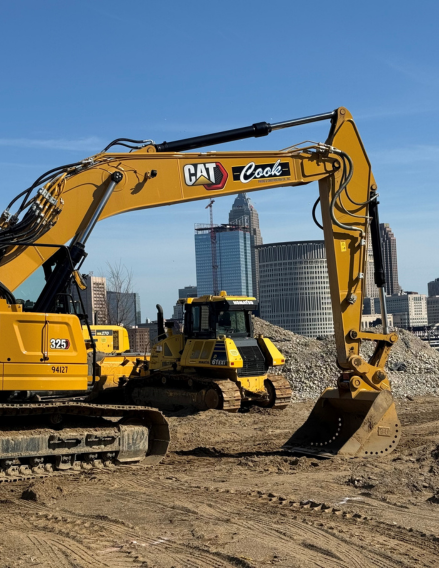
OJT is particularly valuable because it takes place in the real-world environment where workers will apply the knowledge. Rather than discussing hazards and procedures in theory, employees can see firsthand how safe work practices are implemented during excavation, utility installation, equipment operation, line locating, trenching, and other daily activities.
This type of training works especially well for:
- New employees learning company procedures
- Equipment operation and task-specific skills
- Utility locating and excavation practices
- Hazard recognition and risk assessment
- Reinforcing procedures discussed during formal training
- Developing future crew leaders and supervisors
One of the greatest advantages of OJT is the immediate connection between training and performance. Employees receive direct instruction, hands-on experience, and real-time feedback while completing actual job tasks. This allows supervisors to correct unsafe behaviors, answer questions, and verify competency before employees perform work independently.
Effective OJT should be intentional and structured rather than simply assigning a new worker to follow an experienced employee. Supervisors should establish clear objectives, demonstrate proper techniques, observe the employee performing the task, and provide coaching throughout the process. When conducted properly, OJT strengthens understanding and retention because workers learn by doing.
Like any training method, OJT also has challenges. The quality of instruction depends heavily on the knowledge and communication skills of the trainer. Work schedules and production demands can sometimes limit opportunities for detailed instruction, and without proper documentation, valuable training may go unrecorded.
For many construction and utility contractors, OJT serves as the bridge between formal instruction and real-world application, helping workers build confidence, competence, and safe work habits that last throughout their careers.
No Matter the Method, Documentation Is Critical
Regardless of the training method selected—classroom, virtual, paper-based, or on-the-job training—it is critical to ensure the training is properly documented. Every session should include:
- A sign‑in sheet
- The jobsite name or location
- The date of training
- The topic covered
Accurate documentation not only supports OSHA compliance and ORC 3781.261 compliance, but also protects both employees and employers by demonstrating a consistent commitment to safety training. Good records show that each worker received the information needed to work safely and that the company maintained its duty to train employees on recognized hazards.
Choosing the Best Method: It’s All About the Message
No matter the format, the most important part of any training is ensuring the message is clear, relatable, and immediately applicable. Workers should walk away understanding how the information applies directly to the tasks they are performing.
A great training session—whether in person, virtual, paper-based, or on-the-job —should:
- Address real hazards workers encounter
- Connect safety principles to the day’s work
- Encourage questions and participation
- Reinforce OSHA-required topics
- Strengthen underground damage prevention education
- Build a culture where speaking up about safety is valued
The construction and utility industries continue to evolve, and so do training methods. What hasn’t changed is the commitment to ensuring every worker goes home safe at the end of the day. By using a mix of training techniques, documenting every session, and choosing the method that best fits the crew’s needs, contractors can remain both compliant and effective—all while keeping safety at the forefront.
This article was written by:
Kent J. Crytzer, CSP | Director of Safety
Construction Employers Association
www.ceacisp.org