

THE BURIED MONSTER
If the headline got your attention, the REST OF THE STORY may not be that obvious.
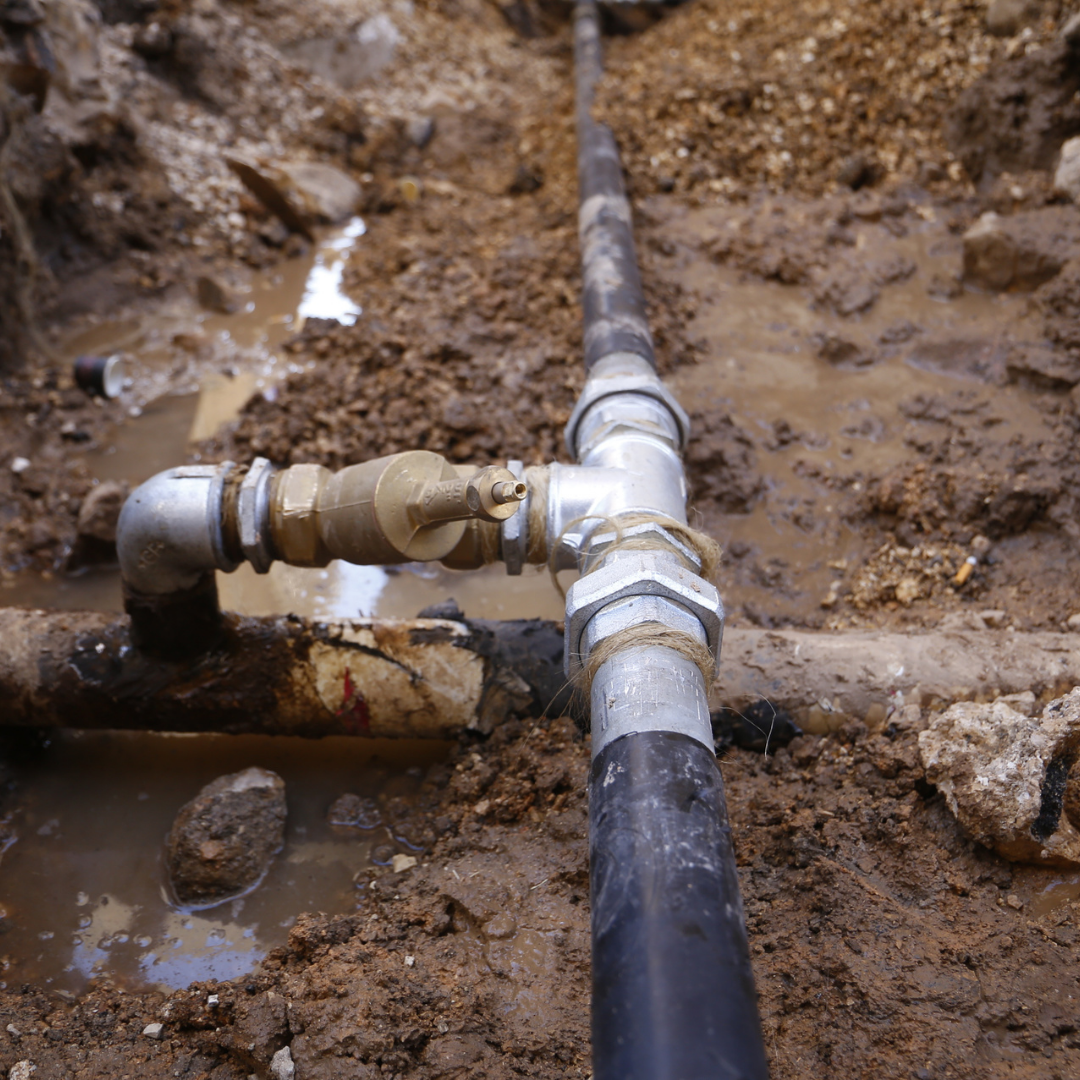
My intentions are not to restate the countless, some great, attempts to promote utility protection through damage prevention. Yes, if we accidentally disturb utilities, we may release their stored energy. These now uncontrolled energy sources may be devastating, from property damage to even the loss of life. Most already know and respect both the dangers present and the costs associated with the loss of critical communications and services. You may not be accustomed to someone terming the hazard this way.

While I’m an excavation safety expert, I often advocate for safety on a diversification of topics, in both the classroom and on the job site. I contend that most safety hazards fall, no pun intended, under these same basic laws of physics present with utilities. Allow me to get kind of off my targeted topic for a moment.
Pause and consider anything that is mechanically compressed or placed under pressure — from gases like natural gas, air, or steam, to fluids such as hydraulic oil or water, to springs and other elastic materials, and even electrical voltage pushed through a transmission line.
If there was a loss of control and this stored energy was released, the resulting danger is usually obvious. Many times, these releases are not so apparent and are easily overlooked by forgetfulness or lack of training, such as electrical power stored in a capacitor, hydraulic pressure still present in a machine that has been shut off, or the heavy compressed spring used in air braking systems. All, with many, many more, you could interject into the equation when there’s potential danger should this stored energy be released, uncontrolled.
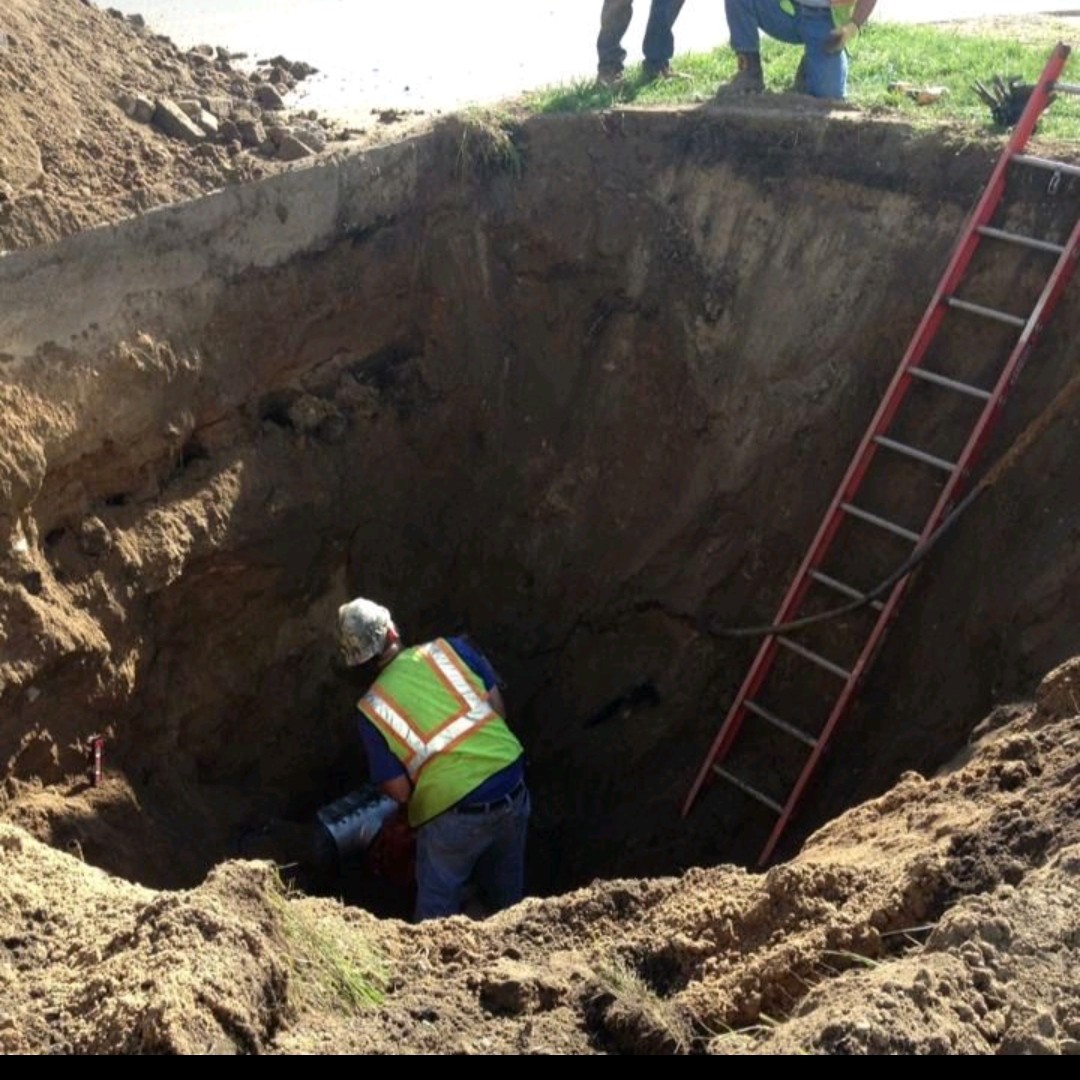
Unsafe Trench – What Not to Do
Time to get on point and reveal the monster.
It’s not anything created through mechanical compression or by any utility company. It’s not anything typically created by man, put very much exposed by man! It’s the stacked soil, those exposed vertical walls when we dig in the ground. The origin of the dirt doesn’t matter. When we expose it and expect it to stay there, we’re asking it to defy gravity. A concept that if you had the answer for would undoubtedly make you the richest person on the planet!
Anyone that disrespects this lurking power in those embankments does so at their peril. The typical cave-in can amount to 2 to 3 cubic yards of material. That’s the monster! With 3000 lbs. being a good estimate of weight per cubic yard of soil this puts the approximate total weight at 3 to 4.5 tons. How much does your truck weigh? I have personally witnessed cave-ins that were 4 cubic yards, that’s 6 tons of material! Fortunately, no one was inside those excavations at the time. I’m proud to report that when there were people exposed, I had convinced them to get out and stay out.
If you’ve ever allowed yourself to be exposed to an unprotected excavation, or allowed others to be, you were gambling that the cohesion of billions and billions of particles, some of which can’t even be seen without magnification, would stick together and defy gravity.
Maybe in a future article I’ll further address misunderstandings about soil types and why none of them can be trusted. I would take that same opportunity to address how this same hazard directly influences and is influenced by buried utilities.
I’ll leave you with this: please seek out the proper training to deal with excavation work. Regulations require that all dig sites have a Competent Person that has had specific training perform inspections and manage the site. While minimum training requirements can be met with a 6-hour class and even completed online, is this what you want for your workforce, minimum? I believe in-person training should last at least eight hours for optimal results. I’m not a fan of abbreviated classes, online programs for this topic, or those that are promoting equipment rentals and sales. While not a fan, it’s still training. If the content is accurate, it can support the cause or serve as refresher training. Midwest Underground Technologies program is a full day of comprehensive training. Please feel free to contact me should you need any help with this or have any questions. Following is a partial list of known providers of this safety training.
Unsafe Trench – What Not to Do
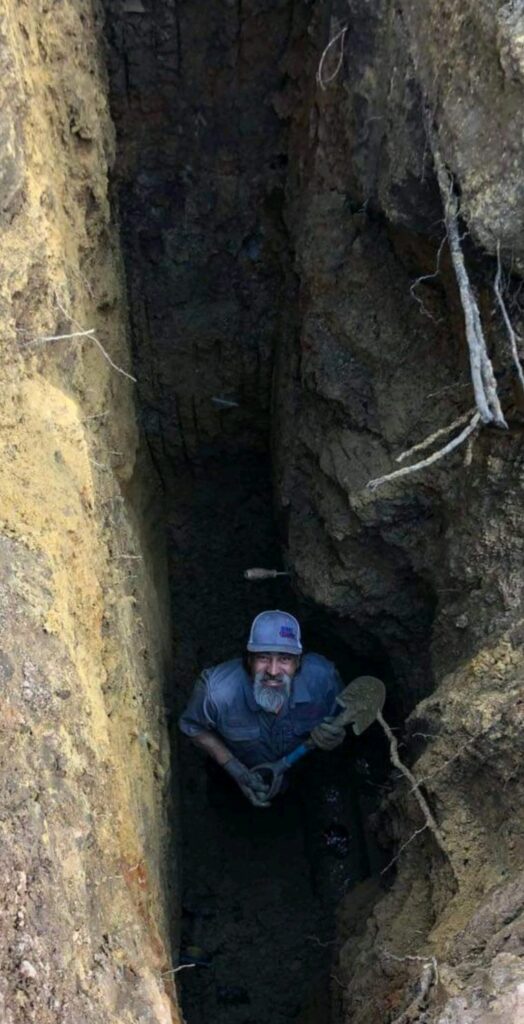
Until next time, please respect excavation safety with the same or even greater respect you give buried utilities!
This article was written by:
Dana “Buck” Buchholzer
President,
Midwest Underground Technologies, Inc.
PH: 330-888-0621
TRAINING PROVIDERS:
Midwest Underground Technologies: www.TrenchRescue.co or Buck@trenchrescue.co
SCR Safety Solutions: www.SCRsafety.com
“OBWC” Ohio Bureau of Workers Compensation: www.bwc.ohio.gov
“CEA” Construction Employers Association: www.ceacisp.org
“OCA” Ohio Contractors Association: www.ohiocontractors.org
“OAWWA” Ohio section of American Water Works Association: www.oawwa.org
Shoring rental providers: Ohio Cat, United Rentals and National Trench Safety.