
Subsurface Utility Engineering:
A Confirmed Cost Savings
As underground utility installations increase nationwide—whether through rural fiber expansion, urban sprawl, or infrastructure improvement projects—the need to accurately identify their locations before construction begins is becoming essential. Unexpectedly encountering utility lines during construction can result in significant damages, customer outages, and safety concerns and disrupt project costs and schedules. Subsurface Utility Engineering (SUE) addresses these issues by following ASCE 38-22 standards and using advanced geophysical equipment, expedited data processing, and industry training that has evolved with the technologies to accurately locate and map underground utilities throughout all portions of the project lifecycle.
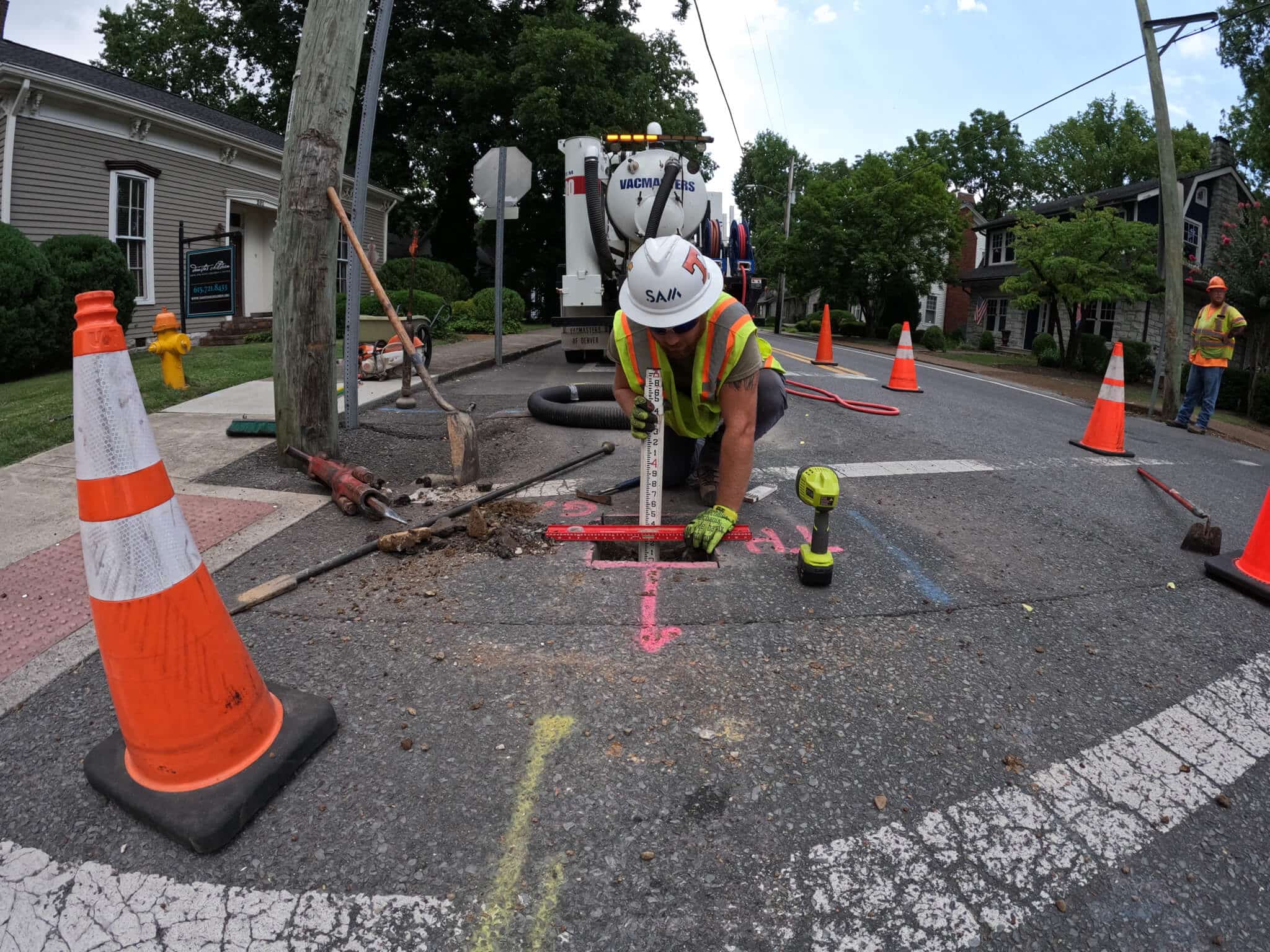
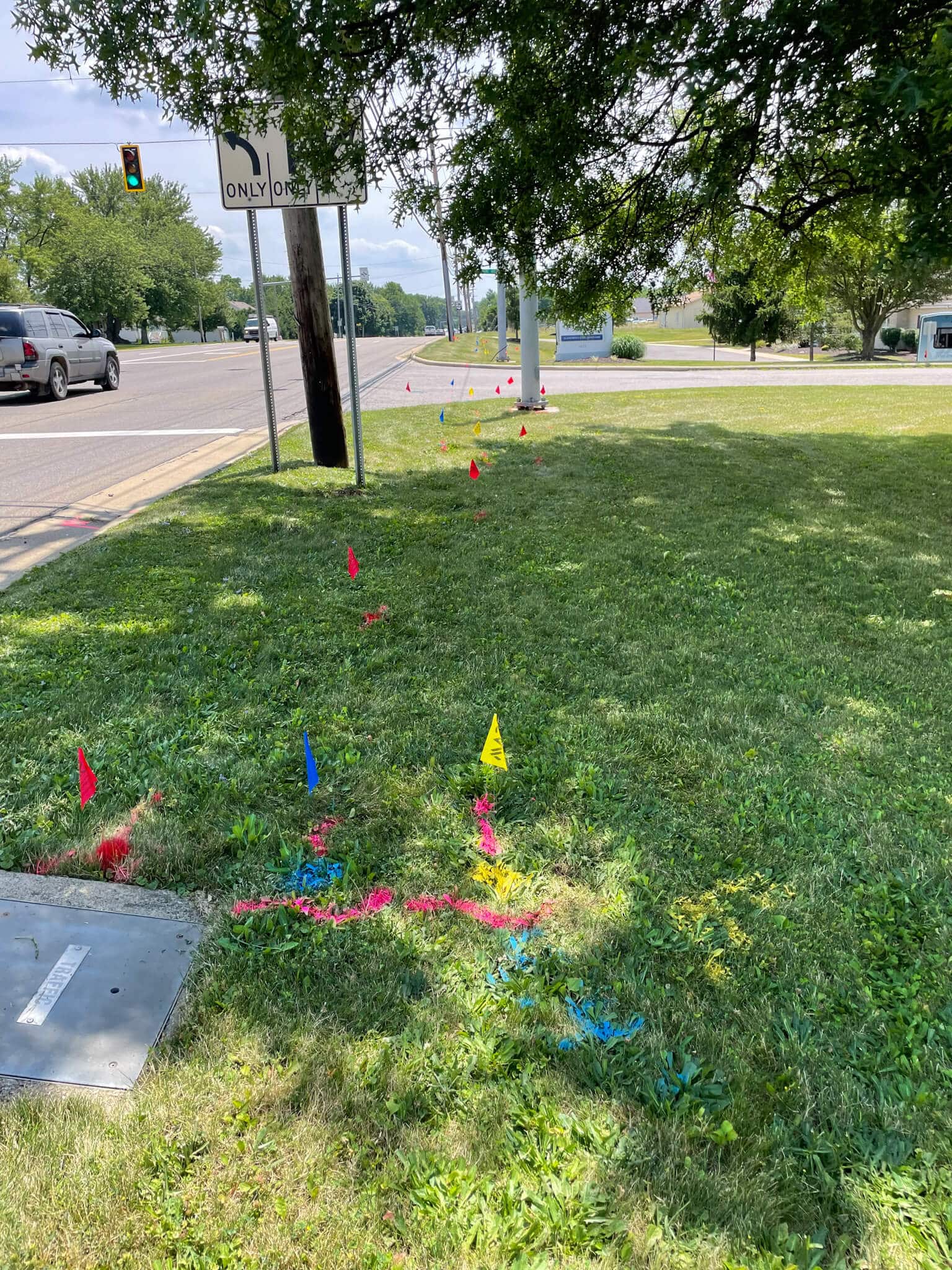
The demand for a return on investment grows greater as project funding comes from multiple sources and SUE has a proven track record of providing the desired return. Studies conducted by universities, transportation committees, and the FHWA have provided the public with ample amount of data showing the benefits of SUE on transportation projects of varying sizes and durations. Because of this many departments of transportation implement this process into their project life cycles to save cost on the projects through DOT funding and in an effort to save costs for rate payers when utility relocation is reduced. While DOT’s are some of the larger promoters of this process, SUE has found its way into multiple markets across the world from oil and gas, electric, and all aspects of transportation.
Pennsylvania Department of Transportation: evaluation of subsurface utility engineering for highway projects: Benefit-cost analysis (2012):
Louisiana Department of Transportation and Development: Cost and Time Benefits for Using Subsurface Utility Engineering in Louisiana (2021):
Pennsylvania State University: Pennsylvania Transportation Institute of the Pennsylvania State University (2007):
University of Toronto: Ontario Sewer & Watermain Contractors Association (2005):
Purdue University: Purdue University Department of Building Construction Management (2000):
SUE Quality Levels
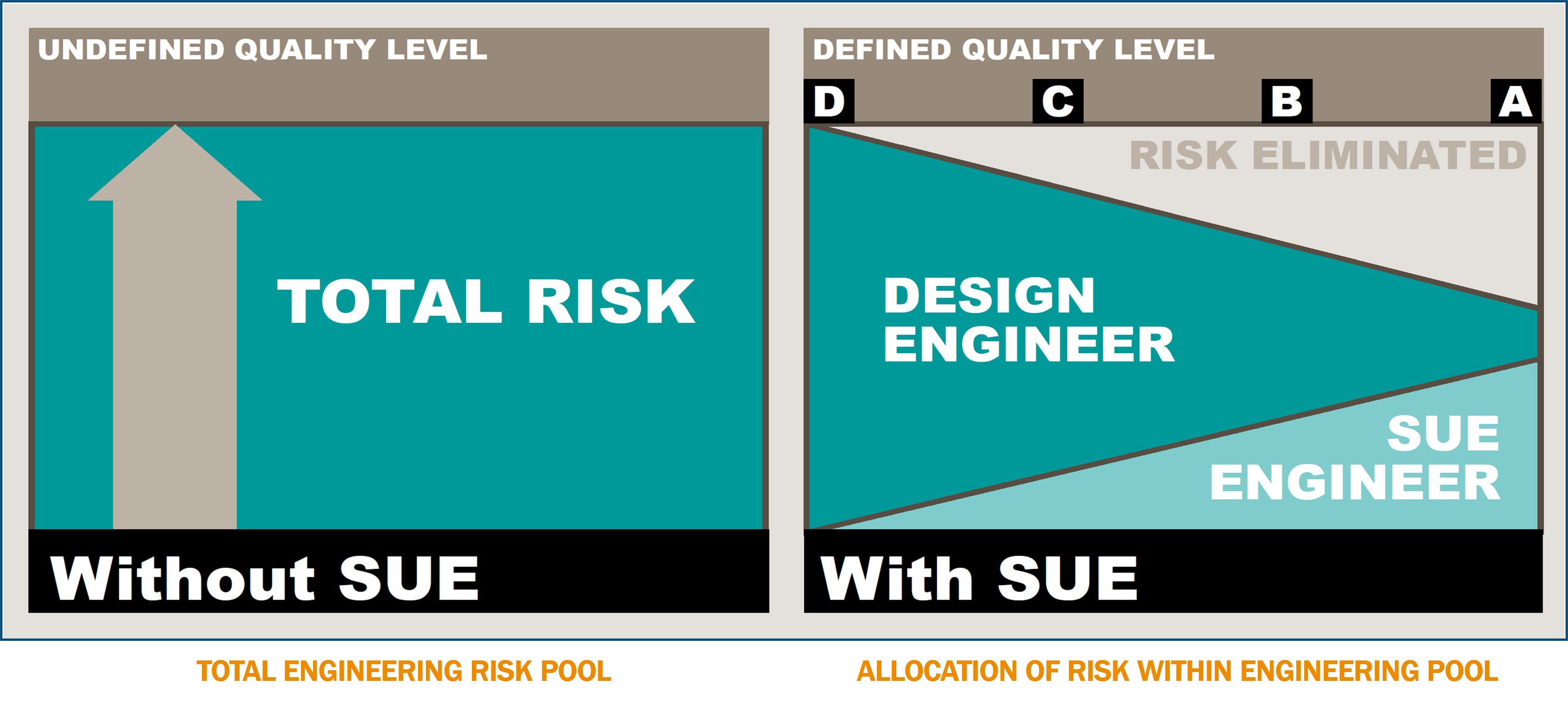
Quality Levels may be thought of as degrees of risk, or how much information is really needed to adequately design and construct a project. Engineering plans typically contain disclaimers as to the accuracy of the utility information. There are four recognized quality levels of underground utility information ranging from Quality Level (QL) D (the lowest level) to Quality Level A (the highest level).
Each of the four quality levels is described as follows:
While cost savings for projects is a critical item, risk mitigation is just as important on a project and SUE addresses this as well by eliminating risk by creating accurate deliverables developed by SUE professionals correctly utilizing each ASCE 38-22 Quality Level (A, B, C, D) and the judgements made by years of experience gained by understanding underground infrastructure for all utility types.
This article was written by:
Rhett Sloan, PLS (GA, LA, MS, ID, PA, KY, OH, NY, SD, ME)
SUE Department Manager/Associate, SAM
rhett.sloan@sam.biz
SAM (Surveying and Mapping, LLC)